Natsar Cybersecurity Insights
- Jan 22, 2025
Cybersecurity Essentials: How Threats, Vulnerabilities, and Exposures Impact Risk
- Josh Moulin
- Cybersecurity, Risk Management, Leadership & Strategy
- 0 comments
Subscribe To Get Notified of New Content!
Your information stays with Natsar—we never sell it or share it.
Intended Audience: Beginner cybersecurity professional, business leaders, and anyone interested in understanding how to manage cyber risks effectively.
When discussing cybersecurity, it’s easy to get lost in a sea of technical jargon. But at its core, cybersecurity is about one thing: managing risk. That risk isn’t random—it arises from three key factors: threats, vulnerabilities, and exposures. Understanding these factors is crucial for creating an effective risk management strategy.
Defining the Key Components of Cyber Risk
Threats: A threat is any potential event or actor capable of causing harm to an asset. Threats can come in many forms, including hackers, malicious insiders, environmental disasters, or even unintentional human error. While threats can’t always be controlled, understanding their nature helps organizations better prepare for potential attacks.
Vulnerabilities: A vulnerability is a weakness in a system or process that can be exploited by a threat. Examples of vulnerabilities include unpatched software, misconfigured systems, weak passwords, or inadequate physical security. Reducing vulnerabilities is a core goal of any cybersecurity program.
Exposures: Exposure refers to how accessible a system or asset is to a potential threat. Even if vulnerabilities exist, if a system isn’t exposed to a particular threat, the likelihood of exploitation is significantly reduced. For example, a critical server that’s physically isolated from external networks has minimal exposure to external cyber threats.
How These Components Interact to Create Risk
Cybersecurity risk arises when these three elements overlap. A threat actor exploiting a vulnerability on an exposed system creates the risk of a successful attack. Without any one of these elements, the risk either diminishes or becomes negligible. Let’s break this down:
If a threat exists but there’s no vulnerability or exposure, the risk is minimal.
Example: A hacker might target your network, but if your systems are fully patched and securely configured, the risk of compromise is low.If a vulnerability exists but there’s no exposure, the risk is limited.
Example: An old, unpatched system that’s not connected to the internet may have vulnerabilities, but without exposure to external threats, it’s unlikely to be exploited.If exposure exists without a corresponding vulnerability, the risk remains low.
Example: A web server may be publicly accessible, but if it’s up to date with all security patches and uses strong authentication, it reduces the likelihood of successful exploitation.
The goal of risk management is to reduce the overlap of these three elements by minimizing vulnerabilities, limiting exposure, and preparing for potential threats.
A Practical Example: Wildfires and Risk
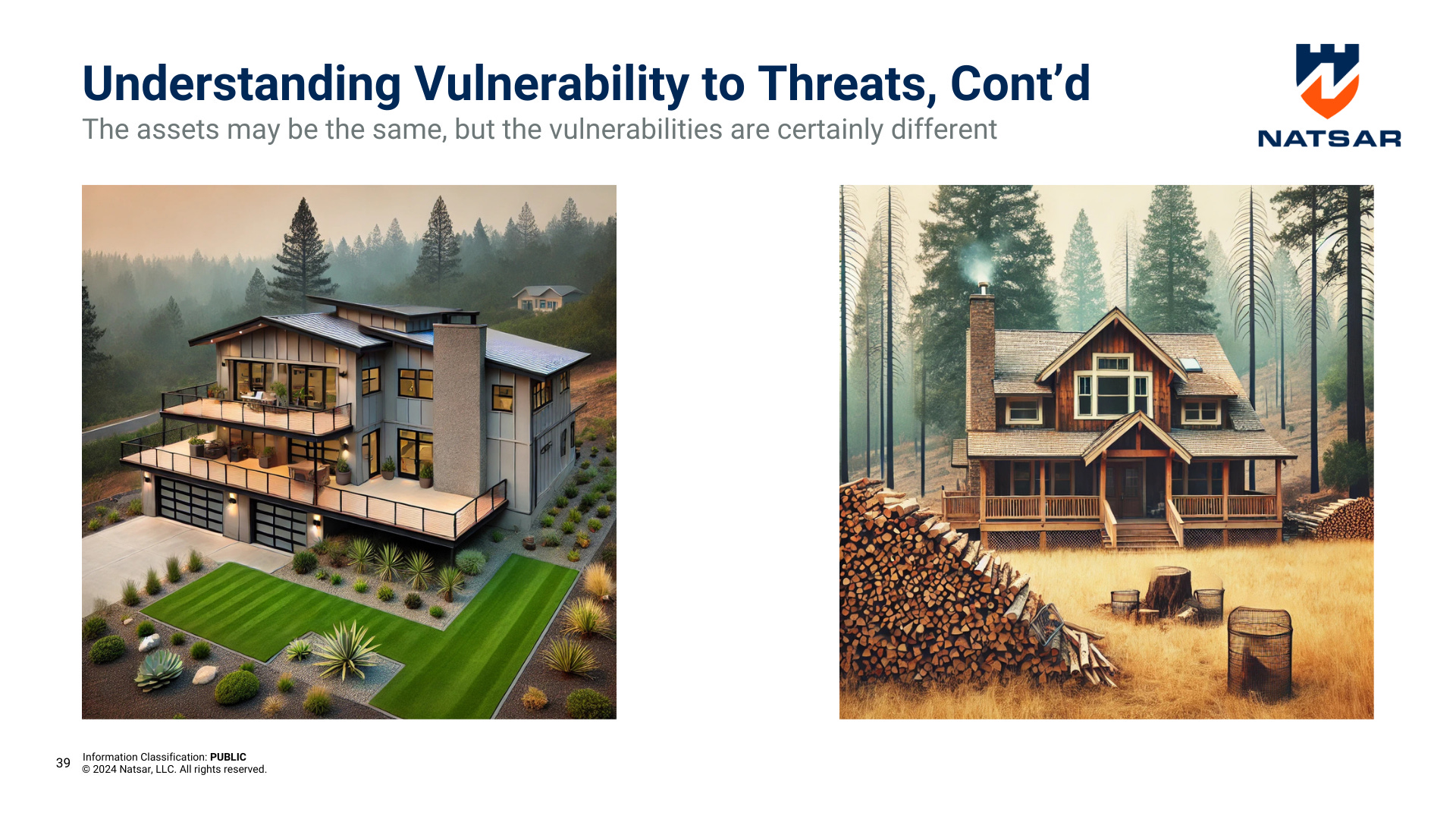
Slide taken from Natsar’s on-demand course: Introduction to Cybersecurity Risk Management: A Practical Primer
Let’s take a real-world analogy to better understand these concepts. Imagine two houses located near a forest prone to wildfires. The threat here is the wildfire. One house is made of wood and has a wood shake roof, has dry grass around the home, and has stacks of combustible material in close proximity to the structure. The second house is constructed from fire-resistant materials, has a metal roof, and has a defensible space around the entire structure. The wooden house represents a vulnerability because its materials make it easier for the wildfire to cause damage. Now, if both houses are located in the forest, they have equal exposure to the wildfire threat. However, because one house is less vulnerable, the overall risk to it is significantly lower.
This analogy helps explain why simply having exposure to a threat doesn’t always result in high risk—it’s the presence of vulnerabilities that amplifies the risk level.
Steps to Reduce Cyber Risk
Identify and Reduce Vulnerabilities:
Regularly conduct vulnerability scans and apply patches to reduce weaknesses in your systems.Limit Exposure:
Implement network segmentation, appropriate security controls, mitigations, access controls, and restrict unnecessary services and traffic.Prepare for Threats:
Stay informed about emerging threats through threat intelligence services, train staff on security awareness, and implement a robust incident response plan.
Bottom Line
Understanding the interplay of threats, vulnerabilities, and exposures is critical for managing cybersecurity risk. By reducing vulnerabilities, limiting exposure, and preparing for potential threats, organizations can significantly reduce their risk profile. Cybersecurity isn’t just about preventing attacks—it’s about being strategic in managing the factors that contribute to risk.
Learn More About Risk Management and Earn a Continuing Education Certificate
For a deeper dive into cybersecurity risk management, watch our no-cost training video, Introduction to Cybersecurity Risk Management: A Practical Primer, available on YouTube or through Natsar’s website. By completing the training on Natsar’s website, you’ll not only gain valuable insights into risk management but also earn a certification for Continuing Professional Education (CPE) credits—perfect for professionals looking to advance their skills.
How Natsar Can Help
Natsar offers training and consulting services on managing cyber risks, creating in-depth risk, vulnerability, and threat assessments, briefing executives and boards, and ultimately helping organizations implement tailored risk management strategies that align with their business goals. Whether you need a comprehensive risk assessment or want to learn how to prioritize cybersecurity investments effectively, Natsar is here to help. Visit Natsar’s website to learn more.
In addition to our training, we also have products available to help you develop your risk management program.